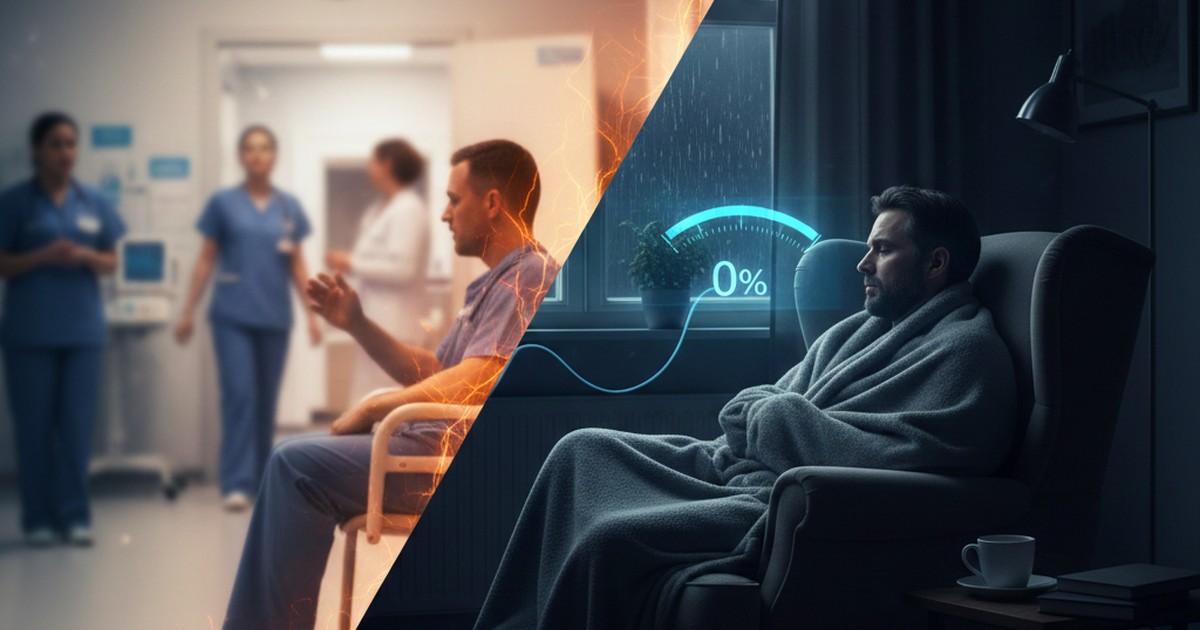
The last few days have been a blur. Not the fun, celebratory kind of blur, but the kind that involves bright, sterile lights, the rhythmic beeping of monitors, and the overwhelming scent of antiseptic. My wife had a nasty accident—a heavy bench decided to make a rather forceful acquaintance with her foot, resulting in a fractured bone. It was, undoubtedly, a tough time.
But what really struck me during this stressful episode wasn't just the difficulty of the situation itself, but my own bizarre reaction to it. And maybe, just maybe, I'm not alone in this weirdness.
🎭 The Strange Joy of Obligatory Interaction
As an introvert, my natural state is one of quiet reserve. I'm happiest curled up with a book or working on a solo project, my social battery safely tucked away and charging. Yet, for three straight days in the hospital, my routine was shattered.
I was forced into constant, often high-stakes, interactions:
- Nurses and Doctors: Detailed discussions about pain management and surgical options.
- Waiting Room Acquaintances: Sharing weary smiles and sometimes surprisingly deep, genuine conversations with strangers going through their own crises.
- Well-Meaning Visitors: Brief, friendly check-ins with neighbors and family I haven't seen in months.
And here's the kicker: I really enjoyed it.
There was a strange, almost intoxicating energy in these moments. The shared stress created a unique, temporary bond. The conversations were immediate, real, and didn't require the mental energy of initiating or planning. My role was simple: be present, relay information, and be supportive. My usual paralyzing fear of "what to say next" was overridden by the urgency of the moment. My social battery, instead of draining, seemed to be running on adrenaline and necessity.
It felt... good. Productive. Even, dare I say, socially fulfilled.
⚡ The Post-Hospital Power Failure
Then, we came home.
The relief was immense. My wife was safe, resting in our own bed, and the crisis was technically over. We had our quiet, peaceful sanctuary back.
Logically, I should have felt an immediate sense of calm and rejuvenation. This was my environment! My low-stimulation haven!
Instead, for the next several days, I felt utterly terrible.
I wasn't sick, but I was exhausted down to my bones. I was irritable, scatterbrained, and couldn't focus on anything. I avoided emails, put off easy chores, and the thought of speaking to anyone on the phone felt like climbing a mountain. It was an intense, lingering mental and emotional fatigue that was far worse than the tiredness of the actual hospital stay.
This is the introvert's ultimate mind-trick, and it makes us feel genuinely weird.
🧠 The Introvert's Hidden Calculation
I realized that what happened was a delayed, massive energy crash.
In the hospital, I was operating in crisis mode. The extreme stress and novelty of the situation pumped me full of cortisol and adrenaline, effectively bypassing my natural energy limits. I looked like a functional, communicative extrovert, but I was running on a temporary, high-octane fuel that masked the true cost of all that interaction.
The moment I stepped back into the quiet of my home, the emergency engine shut down. The bill for those three days of intense, forced sociability and high-alert vigilance came due all at once. My system demanded a complete, non-negotiable shutdown to process the stress, the trauma, and the sheer volume of verbal exchange.
💡 The Takeaway: It’s Not Socializing We Hate, It’s the Recovery
Being an introvert is weird because we can genuinely enjoy social moments, especially when they are meaningful or necessary. We can even thrive temporarily in high-pressure, social environments.
But the defining trait isn't the aversion to people; it's the requirement for solitude to recover mental energy.
If you've ever had a surprisingly great time at a party, only to feel utterly dead for two days afterwards, you know this feeling.
The hospital confirmed it: I enjoyed the connections and the purpose of the conversations, but the sustained effort of constant interaction, even in a necessary context, was a massive energetic drain. The feeling of being "bad" when I got home wasn't depression or illness—it was simply the profound silence of a battery finally hitting 0% and demanding a long, quiet recharge.
If you're an introvert who's just come out of a demanding, high-interaction period, give yourself grace. That crash is real. It's not a sign you failed; it's a sign your system is working exactly as it should be, protecting your most valuable resource: your inner quiet.
Are you an introvert who has experienced this kind of "delayed energy debt" after a high-interaction event? Share your weirdest social-crash story in the comments!