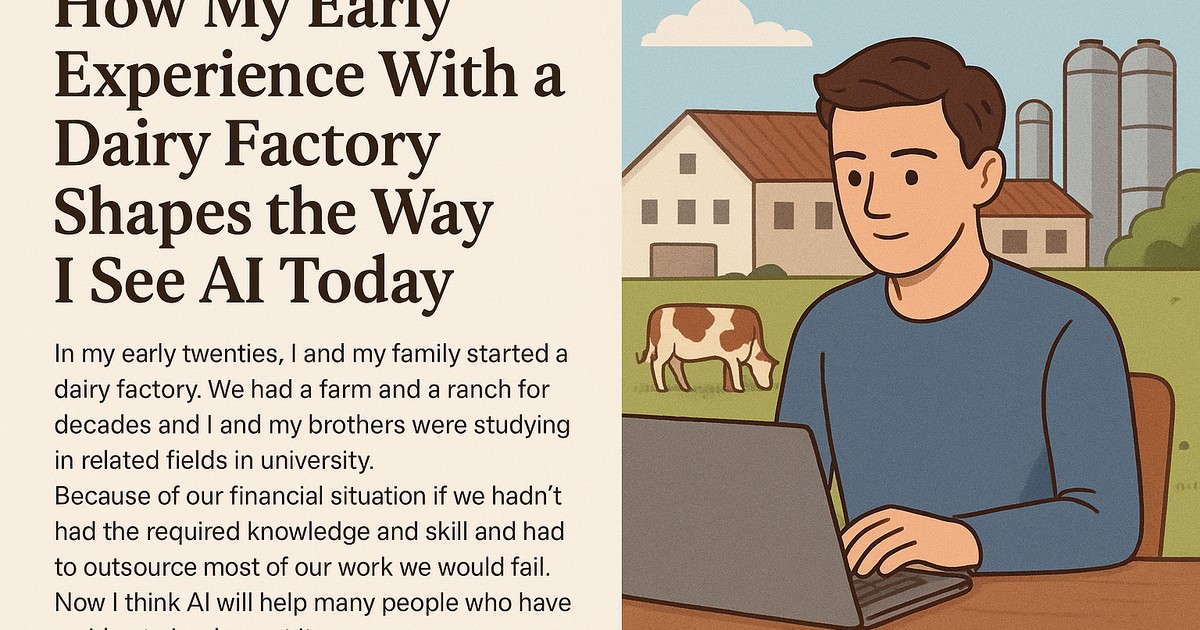
In my early twenties, my family and I built something ambitious: a dairy factory. For decades, we had already run a farm and a ranch, so the world of agriculture and livestock wasn’t new to us. My brothers and I were studying related fields at university, and the timing felt right. We had the knowledge, we had the motivation, and we had just enough resources to take a big step forward.
But here’s the truth:
If we didn’t have the skills ourselves—if we had needed to outsource most of the technical and operational work—we would have failed. Our financial situation simply didn’t allow for expensive consultants, hired specialists, or trial-and-error mistakes. What kept us alive was our own expertise. Every decision, every design, every optimization came from inside the family.
That was our advantage.
And it was the reason our factory survived.
Looking back, I realize how many people with great ideas never get the chance to try. Not because they lack vision, but because they lack the specialized knowledge or can’t afford the help needed to bring their idea to life.
Today, things are changing.
With the rise of AI, I genuinely believe the barriers that once held people back are disappearing. AI won’t magically replace hard work or creativity, but it can level the playing field. It can give someone the equivalent of a small team—researchers, strategists, developers, designers—right at the moment they need it most.
When we started the dairy factory, we had no safety net. We had to know everything ourselves.
But now? Someone with an idea doesn’t need years of training before they can begin. They don’t need to come from a specific background. They don’t need a large budget to hire experts.
AI isn’t just a tool.
It’s becoming the supportive partner many entrepreneurs wish they had in their early days—someone who can guide, explain, correct, and help execute.
I often think about how things might have been if AI existed back then. We still would have worked hard, but maybe the path would have been less steep. Maybe we could have moved faster, experimented more, or avoided costly mistakes.
And that’s why I’m optimistic.
More people than ever will get the chance to build something real.
Not because they already have the skills—but because now, they can learn, plan, and create with the help of a powerful new kind of partner.
The next generation of entrepreneurs won’t be limited by what they don’t know.
They’ll be empowered by what they can learn instantly.
And that, to me, is the most exciting part of the future.